Through the Eyes of the Consul General of Japan in Detroit
2026/3/10
Through the Eyes of the Consul General of Japan in Detroit
Vol.18
The Power of Music: Cleveland Edition — The Dynamism of Pianist Mao Fujita
Vol.18
The Power of Music: Cleveland Edition — The Dynamism of Pianist Mao Fujita
March 10, 2026
Hajime Jimmy Kishimori
Consul General of Japan in Detroit
Hajime Jimmy Kishimori
Consul General of Japan in Detroit
Let me begin with a confession, even at the risk of being scolded by Mr. Fujita’s fans. Until February 17, 2026, when I attended a solo recital at Severance Hall—the home of the Cleveland Orchestra—at the invitation of Honorary Consul Fujita and his wife, I had assumed that Mao Fujita was a woman (much like the figure skater Mao Asada.)
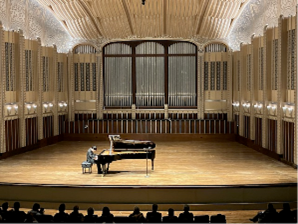
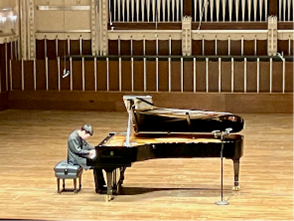
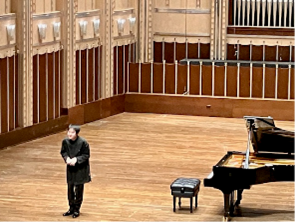
On the large stage where orchestral musicians usually sit in rows, there was only a single piano. From the very first note, I was captivated. I was listening to a performance of one of Beethoven’s piano sonatas. Fast. Powerful. And emotional. Although it was the sound of a piano, at times it felt almost like the chorus of human voices.
I remember learning the names Mendelssohn and Brahms in elementary school music class.
But Wagner—isn’t that opera? Can that really be expressed with just one piano?
Yet somehow it can be done—magnificently—when performed by the hands of the genius pianist Mao Fujita.
I had wanted to avoid using such a cliché as the word “genius.” But after hearing Mao Fujita’s recital, that was the only word that came to mind. And he is still only 28 years old. How much will his talent continue to grow?
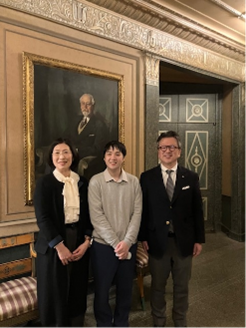
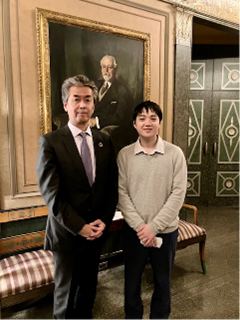
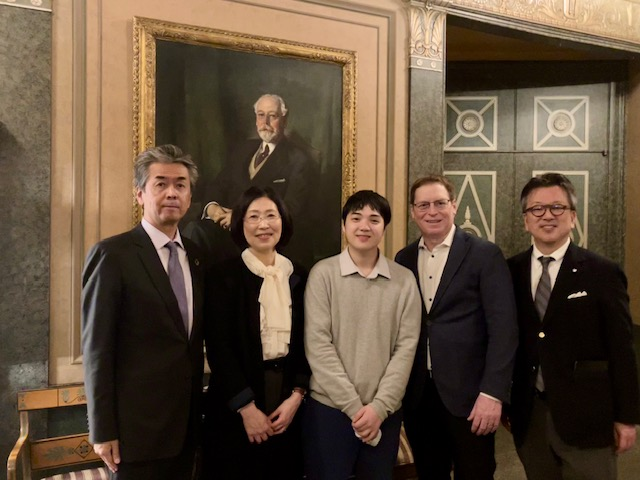
After the concert, Mao Fujita appeared in the VIP lounge, having changed into a sweater, chinos, and tennis shoes. With a slightly shy smile, he said, ” “I love opera. Especially Tristan and Isolde.” Cleveland Orchestra’s President & CEO, Mr. Gremillet, was visibly excited, telling him without pause how extraordinary his technique was, how creative his choice of repertoire had been, and how he had always suspected that Fujita must love opera.
“You don’t look at the score, do you? Do you have everything memorized?”
As for me, I could only manage such an amateurish and rather mundane question. Even so, Mao answered earnestly.
“I don’t look at the score. I’ve practiced these pieces many times since I was young.”
In my previous column about conductor Keitaro Harada (Perspective Vol. 17), I wrote that music has the power to connect people. It can serve politics, diplomacy, business, and even education.
But Mao Fujita’s music was different. Music can simply be music. There is no need to assign it a role or to use it for some other purpose. One can simply be moved by it.
Like the pleasant lingering sensation after drinking a fine whiskey, the resonance of Fujita’s piano remained somewhere deep in my heart long after the final note had faded.
On August 21 of last year, also at the invitation of the Fujita’s, I heard Nobuyuki Tsujii play the piano, also at Severance Hall, for the first time (see Perspective Vol. 9). Before that, I attended a performance of Tchaikovsky’s music conducted by Music Director Franz Welser-Möst together with Mayor Bibb of Cleveland.
I now find myself wondering—with great excitement—what the Fujita’s will invite us to hear next. Even now, my heart beats with anticipation.